English reading and writing on paper, for ages 10–15

Every sentence written on paper gets read.

You upload your child’s paper work; feedback quotes their words and gives one next step.
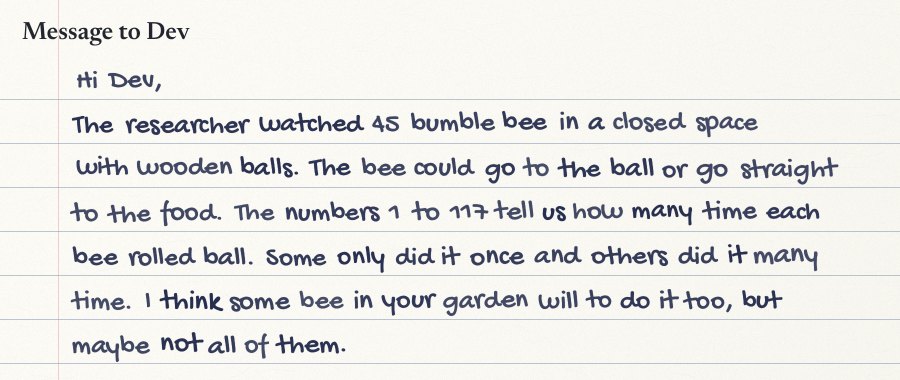
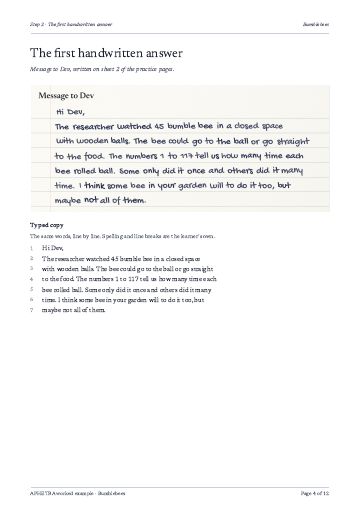
A handwritten message to Dev about 45 bumble bees and wooden balls.
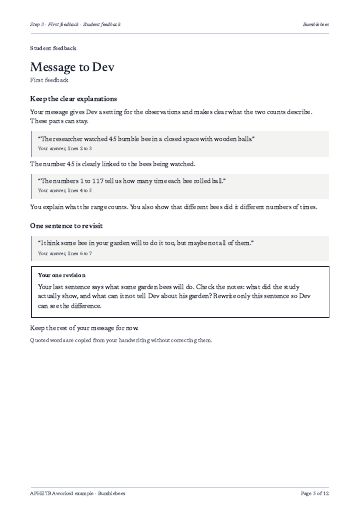
  1. The number 45 is clearly linked to the bees being watched.
  2. You explain what the range counts.
  3. Check your last sentence: what did the study show, and what can it not tell Dev about his garden?
The revised sentence: The bees in the study rolled wooden balls, but we do not know if the bees in your garden will do this too.

After the feedbackThe new sentence tells Dev what happened in the study, then says what is still unknown.

From the Bumblebees example, “Message to Dev”.

Two complete examples, every page

The materials, the handwritten answer, the feedback and what happened next.

Bumblebees

Message to Dev · 12 pages

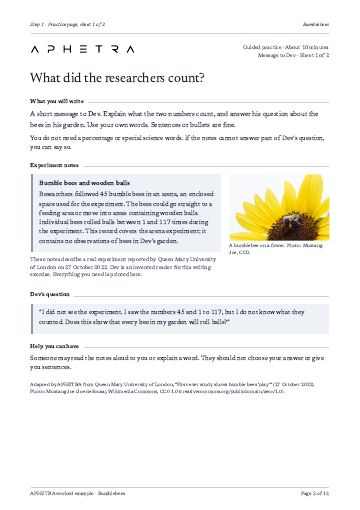
  1. The materials: what did the researchers count?
  2. The first handwritten answer
  3. Feedback: one sentence to revisit
  4. The revision, on paper
  5. Second feedback: keep this revision
Open the example (PDF)

Lion Rescue

Explain the rescue proposal · 7 pages

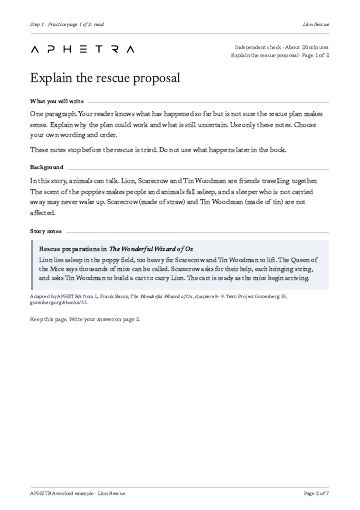
  1. The materials: a rescue plan that stops before the rescue
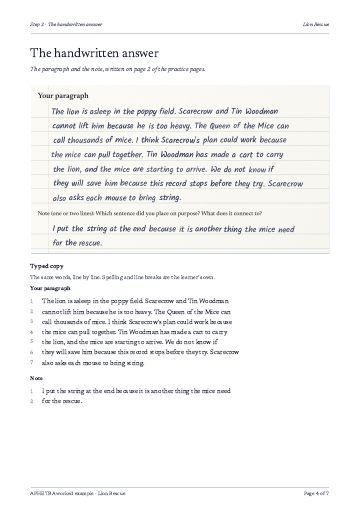
  2. The handwritten paragraph and a short note
  3. Feedback: one thing to work on, not yet revised

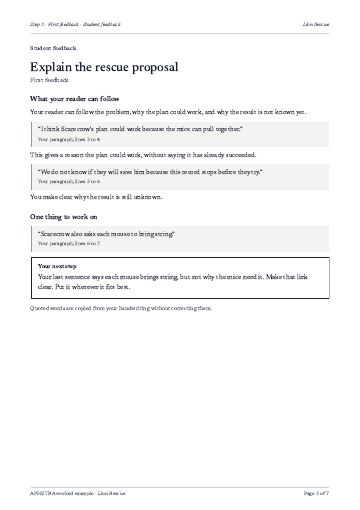
“Your reader can follow the problem, why the plan could work, and why the result is not known yet.”

Open the example (PDF)

One piece of work, four steps

  1. 1

    Download and print

    A4, US Letter or large print.

  2. 2

    Answer on paper

    About 30 minutes, away from the screen.

  3. 3

    Photograph and upload

    One photo per page. The small box in the corner tells us which page it is.

  4. 4

    Read the feedback, do the next step

    The feedback quotes the sentences. There is one next step.

Three things that do not change

Only what can be seen.

Every judgement quotes a sentence the child wrote. What the work does not show is marked “not confirmed yet”: no guessing, no single score.

Everyone sees the next step first.

Parents and children open a page and the top is one thing they can do now. The feedback may notice many things; the next step is always one.

Independent work deserves to be seen.

At upload you say whether anyone helped. Help is never marked down; it keeps the judgement accurate and makes the child’s own progress clearer.
Who it suits

It suits families where

  • the child is 10 to 15 (16 and 17 are welcome; topics are pitched at 10 to 15)
  • the child can write on paper for about 30 minutes
  • a parent can print a few pages and take photos each week
  • you want feedback that points to your child’s own sentences

It may not suit this round if

  • you want scores, rankings or exam grades
  • your child needs a tutor sitting beside them
  • the work must be marked by the school

Start with one piece of work.

Register